
The Hard Drive on the Shelf
There is a closet at almost every company that has ever produced a corporate event. You might not call it a closet. It might be a server room, a cabinet, a shelf in someone's office, or a folder buried four levels deep on a shared drive that nobody has opened since 2019. But it exists, and inside it is something valuable that no one is using.
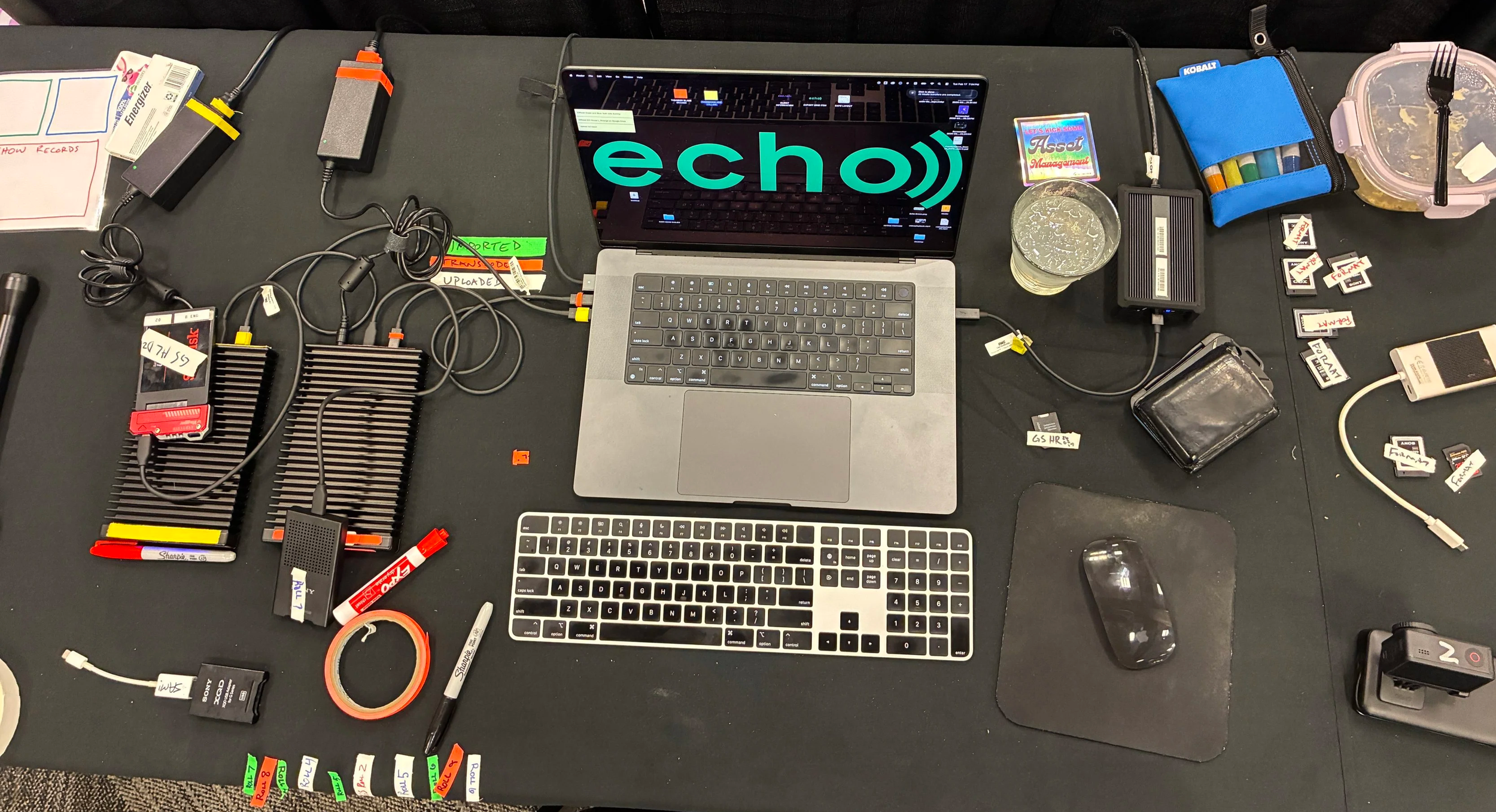
Sam McDonald has seen this closet more times than he can count. He spent fifteen years as the person handing over the hard drive — carefully organized, properly labeled, containing hours of footage from a show that took months to plan and hundreds of thousands of dollars to produce. He packaged it well. He handed it over with good instructions. And he watched it get placed on a shelf.
"You hand it to the client, and you're like, oh, I packaged it up, it's really well organized, you're gonna find all these different sections here, and they're like, oh, thank you so much, we're gonna put that right over here on the shelf, and we're gonna see you next year."
He's not being cynical about it. He understands exactly why it happens. These are enormous files. They require specialized equipment to even open. The event team has already poured everything they had into pulling off the show, and the moment it's over, the adrenaline crashes, people want to sleep, and there are three more events already on the calendar. Nobody has the bandwidth to sit down and figure out what to do with forty hours of raw footage.
But here's what that closet actually represents:
By the time Sam left his last full-time position in the early 2010s, he had accumulated at least forty terabytes of show records. Forty terabytes — and he's quick to note that video files were smaller then, so that was even more footage than it sounds. Dozens of events. Hundreds of sessions. Thousands of hours of speakers, panelists, workshops, breakouts, and general sessions — people saying smart things in front of audiences that paid to hear them.
All of it sitting there. Untouched.
Seth Macchi, the host of The EventPro Show and CEO of LEMG, recognized the pattern immediately. He talked about his earliest gigs, back when archives meant physical tape with handwritten labels, rooms full of formats nobody could play anymore. "That's how I imagine these hard drives," he said. "Just like that digital version of that tape closet doesn't go anywhere."
The format has gotten smaller. The problem hasn't.
What's frustrating about it — and what eventually led Sam to build echo — is that the solution isn't complicated. The content is already there. The cameras were already rolling. The speakers were already mic'd. The production team was already capturing every angle. All of that work has already happened. The footage exists. The question is just whether anyone is going to do something with it.
Most of the time, the answer is “no”. Some clients will pull a session and post it on YouTube. That's genuinely better than nothing. But it's also just one more version of the same long video that nobody has time to watch. It doesn't extend the reach. It doesn't repurpose the content. It doesn't touch the audience again after they've gone home.
"It's way more often that clients are going to not do a lot with that footage than they are going to really tap into its true potential."
That phrase — true potential — is the one worth sitting with. Because the footage on that shelf isn't just a recording of something that happened. It's a library of original insights from real people who were paid to be in that room. It's the voice of your speakers, your executives, your subject matter experts. It's quotable. It's searchable. It's convertible into blogs, clips, podcast episodes, and social content that can carry your event's message for the next twelve months.
The hard drive problem isn't a storage problem. It's a mindset problem. The footage isn't an archive. It's a starting point.
The closet doesn't have to stay closed.